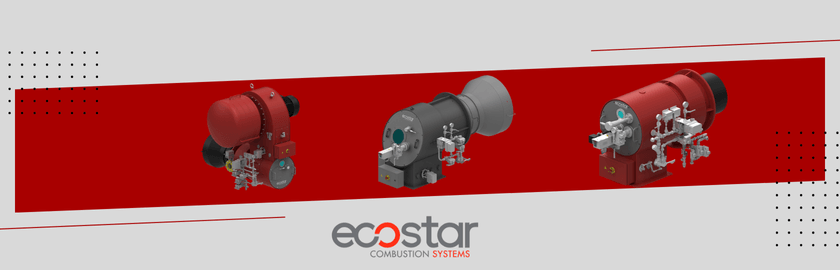
What are natural gas burners?
Natural gas burners are devices that burn natural gas in a controlled manner to meet the heating needs of industrial and commercial applications. By burning natural gas, these systems provide the necessary thermal energy for equipment such as boilers, furnaces, and drying systems. With high energy efficiency, clean combustion, and low emission values, natural gas burners have become one of the most preferred combustion systems today.
Both environmentally friendly approaches and the cost advantage of natural gas have made these systems indispensable in both industrial facilities and large buildings. So what are natural gas burners, how do they work, and in which areas are they used?
What is the purpose of natural gas burners?
The main purpose of natural gas burners is to generate heat by mixing natural gas with air and initiating combustion. This heat is then transferred either directly or indirectly to boilers, generators, or production lines for use in various systems. Burners ensure that natural gas is supplied under pressure, mixed with the correct air ratio, and burned in a controlled manner. This results in efficient and stable heat production at high temperatures.
How natural gas burners work
The operating process of a natural gas burner mainly consists of the following steps:
Gas supply: Natural gas is delivered to the burner through a pipeline under a certain pressure.
Air mixing: Inside the burner, natural gas is precisely mixed with the required amount of oxygen for combustion.
Ignition: The mixture is ignited by an electronic ignition system.
Combustion: A homogeneous flame is formed, providing heat to the required equipment (boiler, dryer, etc.).
Monitoring: The combustion process is continuously monitored via sensors and control panels, and automatic adjustments are made when necessary.
Thanks to this automated and precise process, energy losses are minimized and safe operation is ensured.
Advantages of natural gas burners
High energy efficiency
Natural gas burners provide maximum efficiency by converting almost all fuel into energy. This is a significant advantage in terms of both cost and environmental impact.
Clean combustion – low emissions
Natural gas is more environmentally friendly compared to other fossil fuels. Natural gas burners offer eco-friendly solutions with low NOx and CO2 emissions.
Ease of maintenance
Modern burner systems require minimal maintenance thanks to automation and digital control features. In addition, the clean combustion of natural gas extends the lifespan of the equipment.
Wide range of applications
It can be easily used in many areas, from heating systems to industrial boilers.
Where are natural gas burners used?
Natural gas burners have a wide range of applications in both industrial and commercial sectors:
Hot water and steam boilers
Thermal oil boilers
Ceramic and glass furnaces
Feed, food and paper drying lines
Automotive and chemical industry furnaces
Hot air generators
Building heating systems (large buildings)
Especially in regions where natural gas is widely used, these burners are preferred due to both their compliance with environmental regulations and their ability to reduce operating costs.
What to consider when choosing a natural gas burner
When purchasing a natural gas burner, attention should be paid not only to capacity but also to system compatibility and long-term usage needs.
Capacity (kW): A model with appropriate power should be selected according to the heat demand of the equipment where it will be used.
Modulation ratio: Burners that can adjust themselves according to heating demand save energy.
Automation compatibility: An advanced control panel is important for integration into smart buildings or production systems.
Emission values: Models compliant with new environmental regulations and offering low NOx emissions should be preferred.
Service and spare parts support: After-sales services provided by the burner make a big difference in the long term.
Conclusion
Natural gas burners offer efficient, environmentally friendly, and safe heating solutions for both industrial and commercial applications. Standing out with fuel savings, low maintenance costs, and clean combustion, these systems are among the most important supporters of sustainable production today.
