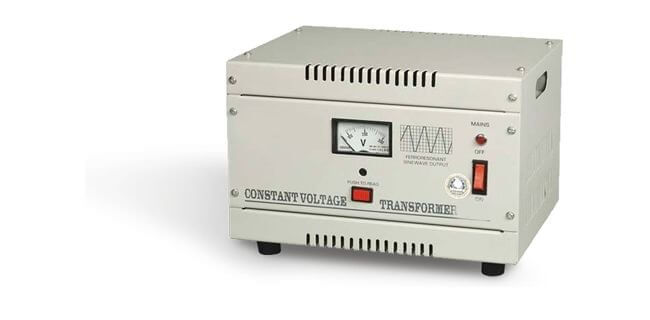
 AC voltage stabilizer plays an important role in protecting electrical devices and extending their service life.
However, there are many types of voltage stabilizers on the market and their quality differs from each other. The following content will explain how to check the quality of a voltage stabilizer:
Measure Input Voltage
Measure the power supply voltage using a multimeter in AC voltage mode. This step shows whether the voltage stabilizer can adapt to the existing grid voltage.
Measure Output Voltage
Now connect the voltage stabilizer and measure its output voltage using a multimeter. Compare input and output voltage to analyze the performance of the voltage stabilizer in working conditions.
Voltage Regulation Analysis
The better the voltage regulation effect, the closer the output voltage will remain to the required standard value even if the input voltage deviates from the standard value.
For example:
A high-quality voltage regulator should be able to maintain the output voltage within the range of 220V ± 3% when the input voltage is 220V. In higher precision models, this indicator can reach ±1%, which shows better performance.
Waveform Distortion Check
Use an oscilloscope to check the waveform of the output voltage. A high-quality stabilizer should produce a sinusoidal waveform without noticeable distortion.
Hearing a Buzzing Sound from the Voltage Stabilizer
Pay attention to the sound produced by the stabilizer while it is operating. A high-quality stabilizer should have a noise level below 50 dB and operate smoothly and steadily.
Temperature Check
After operating for a while, check the outer casing of the stabilizer. Under normal working conditions, a high-quality stabilizer may feel warm, but it should not overheat. Excessive heating may be a sign of overload or internal malfunction.
Points to Consider When Choosing a Voltage Stabilizer
1. Proper power capacity selection
When choosing a voltage stabilizer, it is important that its power rating (Watt or kVA) matches the total power demand of the connected equipment. Experts recommend selecting a stabilizer with a nominal power about 20–30% higher than the intended load. This is especially important for devices with high starting current such as air conditioners, refrigerators, pumps, and motor-type equipment.
2. Input voltage range
The input voltage range in which the stabilizer can operate is one of the key factors determining its efficiency. High-quality models can typically operate stably within 140V–260V, while some industrial models can operate within 100V–300V. In areas where frequent voltage fluctuations occur, models with a wide range are considered more reliable.
3. Response speed
How quickly the stabilizer responds to sudden voltage changes is important. Electronic and static stabilizers usually respond within milliseconds and are more suitable for sensitive electronics. Delayed correction may increase the risk of damage to connected devices.
4. Availability of protective functions
High-quality stabilizers include functions such as overvoltage protection, undervoltage protection, short-circuit protection, overload protection, and temperature control. These features increase the safety of both the stabilizer and the connected devices.
5. Efficiency and energy loss
A good stabilizer not only stabilizes voltage but does so with minimal energy loss. High-efficiency models generate less heat, operate more stably, and help optimize energy costs in long-term use.
Conclusion
The selection of a high-quality voltage stabilizer is essential for the safe and long-lasting operation of electrical equipment. Stability of input and output voltage, waveform quality, noise level, temperature indicators, and protective functions are key factors determining the reliability of the stabilizer. Proper evaluation of these indicators not only prevents equipment damage but also improves the overall stability and efficiency of the energy system.
In addition, choosing a stabilizer with appropriate power capacity, fast response, and a wide input voltage range ensures safer power supply in both household and industrial applications. In short, a high-quality voltage stabilizer is a smart and reliable investment that protects electrical devices, reduces energy losses, and prevents additional maintenance costs in the long term.
