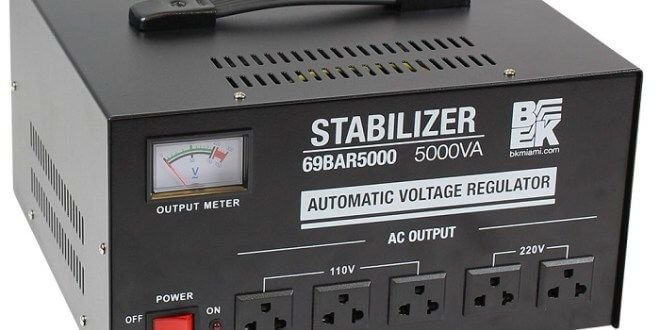
 Energy quality problems are extremely dangerous for industrial and commercial operations.
Voltage fluctuations often lead to equipment failure, production downtime, and costly repair expenses. Voltage stabilizer systems have become essential protective mechanisms in modern electrical infrastructure. These systems ensure that power supply is delivered at a constant frequency and stable voltage, thereby preventing sensitive equipment from being damaged by voltage disturbances.
The East African industrial sector faces various energy quality challenges. Voltage instability arises due to grid issues, load variations, and infrastructure limitations. Voltage stabilizer systems serve as the first line of defense against these problems. Business owners and engineers must clearly understand how these systems are applied and for what purpose they are used.
Voltage Stabilizer Systems
Understanding Voltage Fluctuations and Their Impact
The Nature of Voltage Variations
Voltage fluctuations occur when the power supply level deviates from its nominal value. These changes may appear as overvoltage, undervoltage, or temporary surges. Such issues are frequently observed in industrial environments, especially during heavy machine startup and grid switching. Different types of fluctuations cause different problems for connected equipment.
When electrical devices are exposed to higher-than-rated voltage, this leads to overheating of components and circuits. Prolonged overvoltage increases the risk of insulation damage. Repeated voltage stress significantly reduces the operational lifespan of equipment.
In undervoltage conditions, equipment is forced to operate with higher current than normal. Under such conditions, the stable operation of motors and transformers becomes difficult. Increased current causes overheating and faster wear of components. In severe undervoltage cases, production processes either slow down or stop completely.
Sensitivity of Equipment to Power Quality Issues
Irregular voltage can immediately damage sensitive electronic equipment. Variable frequency drives, computer systems, and programmable logic controllers require stable power supply. Even short voltage spikes can cause data corruption or electronic board failure. During power quality events, manufacturing facilities may lose control over critical processes.
Motor-driven equipment experiences mechanical stress due to voltage fluctuations. Unstable voltage causes torque variations and speed instability in motors. Bearings and coupling components wear out prematurely due to such operating conditions. Maintenance costs increase when equipment operates outside its design parameters.
Lighting systems and HVAC equipment are also sensitive to voltage variations. LED drivers and electronic ballasts fail more quickly under unstable voltage conditions. Air conditioning compressor efficiency decreases and energy consumption increases. Stable power supply is essential for optimal building system performance and longevity.
How Voltage Stabilizer Systems Work
Basic Working Principles
Voltage stabilizer systems continuously monitor incoming power and make real-time corrections. These systems quickly detect voltage anomalies. Correction mechanisms respond within milliseconds to restore voltage to normal levels. As a result, changes at the input or load do not affect the production process.
Automatic voltage regulator technology forms the foundation of modern stabilization systems. These regulators use transformer tap switching or electronic switching systems to adjust voltage. Servo motors move tap changers to increase or decrease output voltage. Electronic regulators use solid-state components for faster response.
The regulation process keeps output voltage within a very narrow variation range. Most industrial voltage stabilizer systems achieve ±1% output accuracy. This precision ensures consistent and stable power delivery to equipment at all times. Continuous control prevents overvoltage or undervoltage from reaching protected loads.
Types of Voltage Stabilization Technologies
Servo-controlled voltage stabilizer systems use electromechanical components for voltage regulation. A servo motor adjusts the position of a variable transformer. This mechanical solution provides reliable performance in heavy industrial environments. Response time is typically between 20–50 milliseconds.
Servo-controlled voltage stabilizer systems
Static voltage stabilizer systems operate using electronic components without moving parts. Transformer taps are switched using thyristors or IGBTs at high speed. These systems respond to voltage changes within 5–10 milliseconds. The absence of mechanical parts reduces maintenance requirements.
Stabilizer units equipped with automatic voltage regulators combine multiple technologies for higher protection. Hybrid designs integrate servo control with electronic switching capabilities. These advanced systems maximize both response speed and regulation accuracy. Multi-stage protection provides complete defense against various power disturbances.
Conclusion
In modern industrial and commercial facilities, maintaining power quality is essential for safe, efficient, and long-lasting equipment operation. Voltage stabilizer systems minimize risks caused by high and low voltage, protect sensitive equipment, ensure power stability, and prevent operational downtime. A properly selected stabilizer system increases technical reliability and helps reduce long-term operational costs.
