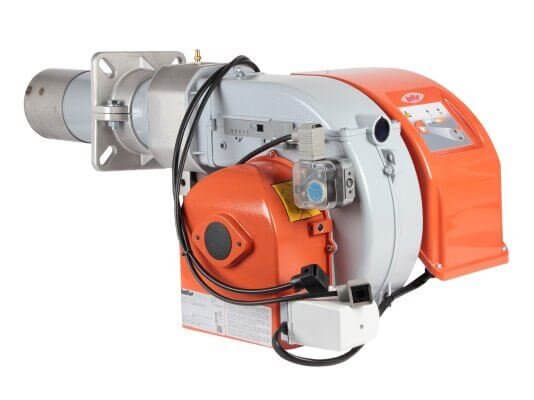
A Blülor is a device designed to ensure efficient fuel combustion by mixing fuel with air in the correct ratio. In heating systems and industrial installations, burners provide controlled and efficient combustion of fuel in boilers and other thermal equipment.
Ecostar offers a wide range of burner solutions designed for different industrial and commercial requirements. In this article, we will examine industrial burners, monoblock burners, conventional burners, and premix burners, as well as the key factors to consider when selecting the right burner.
Industrial Burners
Industrial burners are high-capacity devices designed to meet large-scale heating requirements. They are widely used in factories, power plants, manufacturing facilities, and large commercial buildings.
Ecostar industrial burners stand out with their high combustion efficiency, reliable operation, and low-emission performance.
Applications and Advantages
- Power Plants: Used to meet high thermal energy requirements while improving combustion efficiency.
- Petrochemical Plants: Suitable for industrial processes requiring large amounts of heat and continuous operation.
- Cement and Glass Production: Provide stable and powerful heating for high-temperature production processes.
- Iron and Steel Industry: Used in furnaces for high-temperature applications, melting, and metal processing.
- Glass and Ceramic Industry: Applied in glass melting and ceramic firing processes.
- Food Industry: Used for drying, cooking, roasting, and other heat-intensive processes.
- Paper and Pulp Industry: Used in boiler systems for paper drying and steam generation.
- Construction and Asphalt Production: Applied in asphalt mixing plants and concrete drying processes.
Monoblock Burners
Monoblock burners are compact units in which key components—including the fuel supply system, air fan, control system, and safety equipment—are integrated into a single unit.
This design simplifies installation and maintenance. Monoblock burners are commonly used in medium- and high-capacity industrial and heating systems.
Applications and Advantages
- Textile Industry: Suitable for processes requiring continuous and uniform heat.
- Small and Medium-Sized Businesses: Commonly used in food facilities, hotels, and small manufacturing plants. Their compact design is particularly useful where installation space is limited.
- Steam Boilers: Widely used in low- and medium-capacity steam boilers, providing efficient fuel combustion and helping reduce energy costs.
What Should You Consider When Choosing a Burner?
Selecting the right burner is essential for energy efficiency, safe operation, and long-term performance.
Fuel Type
The burner must be compatible with the fuel being used, such as natural gas, diesel, LPG, biogas, or other fuel types.
Power and Capacity
The burner's heat output should match the requirements of the boiler or industrial process. Modulating burners can adapt to changing loads and improve energy efficiency.
Efficiency
Burners with high combustion efficiency make better use of fuel and help reduce operating costs. Low-emission models are also preferable from an environmental perspective.
Application and Installation
The burner should be compatible with the dimensions and technical requirements of the equipment. Compact monoblock burners can be a practical solution where installation space is limited.
Control and Safety Systems
Flame detectors, pressure sensors, safety valves, and modern control systems are important for ensuring safe and stable burner operation.
Maintenance and Service
Ease of maintenance, spare-parts availability, and the manufacturer's service network should also be considered before making a decision.
Standards and Compliance
The selected burner should comply with applicable local and international safety and performance standards.
Economic Efficiency
The evaluation should include not only the initial purchase price but also fuel consumption, operating costs, maintenance expenses, total cost of ownership, and expected payback period.
Conventional and Premix Burners
Conventional Burners
In conventional burners, fuel and air are mixed during the combustion process or directly within the combustion zone. Depending on the burner design, the mixture may be less homogeneous, which can affect flame characteristics.
- Combustion Process: Fuel and air are mixed within the combustion zone.
- Efficiency: Depending on the application, efficiency may be lower than that of modern premix technologies.
- Emissions: Depending on the design and adjustment, NOx and CO emissions may be higher.
- Applications: Used in a wide range of industrial and commercial heating systems.
- Maintenance: Some systems may require more frequent maintenance and cleaning.
Premix Burners
In premix burners, fuel and air are mixed before entering the combustion chamber. This creates a more homogeneous mixture and allows for better control of the combustion process.
- Combustion Process: Fuel and air are premixed before combustion.
- Flame: Produces a more compact and controllable flame.
- Efficiency: Precise control of the fuel-air ratio helps minimize energy losses and reduce fuel consumption.
- Emissions: Properly adjusted systems can achieve lower NOx and CO emissions.
- Applications: Particularly suitable for modern heating systems requiring high efficiency and low emissions.
- Maintenance: Depending on the design and operating conditions, maintenance requirements may be lower.
Selecting the Right Burner for Industrial Systems
Choosing the right burner for an industrial system directly affects production efficiency, fuel consumption, and overall operating costs.
For more information about selecting the most suitable burner for different industrial applications, see our blog post “How to Choose the Right Burner for Industrial Systems?”
Conclusion
Choosing the right burner not only improves system efficiency but can also reduce fuel and maintenance costs over the long term. To determine the most suitable solution, it is important to consider the equipment specifications, application requirements, fuel type, operating conditions, and overall energy efficiency.
