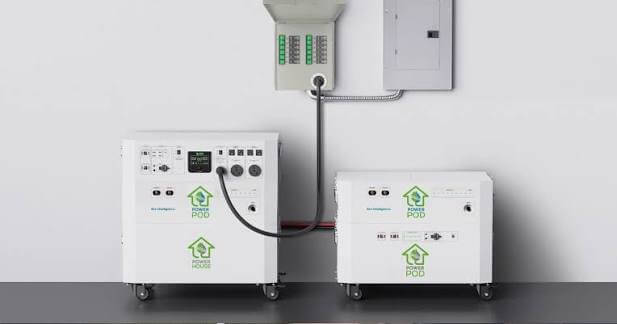
In today’s world, a stable power supply is not just a matter of convenience — it is a necessity for businesses, industrial facilities, and even private homes. That is why automatic generators equipped with an ATS system are becoming an increasingly popular backup power solution. They help prevent downtime, data loss, equipment damage, and financial losses.
Let’s take a closer look at how this technology works and why it is so effective.
What Is an ATS System?
ATS (Automatic Transfer Switch) is an intelligent system that automatically transfers the electrical load from the main power source to a backup power source in the event of a power failure or outage.Simply put, when the main power supply fails, the ATS system operates automatically without human intervention:
- Detects the power outage;
- Sends a signal to start the generator;
- Transfers the electrical load to the backup power source;
- Returns the load to the main power supply when electricity is restored.
How Does an Automatic Generator with ATS Work?
The system operates through several sequential stages:1. Voltage Monitoring
The ATS continuously monitors the parameters of the main electrical grid. If the voltage drops below the acceptable level or disappears completely, the system immediately detects the failure and initiates the backup power sequence.2. Generator Start-Up
Once a power failure is detected, the ATS sends a signal to start the generator engine. In modern automatic generator systems, this process takes place automatically without any operator involvement.3. Load Transfer
After the generator starts and reaches stable operating conditions, the ATS automatically transfers the electrical load from the main grid to the generator.This ensures that the connected equipment continues operating with minimal interruption.
4. Return to the Main Power Supply
When the main power supply is restored, the ATS monitors the grid to make sure that the voltage has returned to a stable level.Once stability is confirmed, the ATS automatically transfers the load back to the main power supply and sends a signal to shut down the generator.
This creates a fully automatic cycle that provides reliable backup power with minimal human intervention.
Advantages of Generators with ATS
Automatic backup power systems offer several important advantages:- Continuity of operation — equipment and essential systems can continue operating during power outages.
- Time saving — there is no need to start or switch the generator manually.
- Safety — the system helps reduce the risks associated with sudden power interruptions and voltage fluctuations.
- Autonomy — the generator and ATS operate automatically without constant supervision.
- Flexibility — suitable for private homes, commercial buildings, industrial facilities, and other applications.
Where Are Automatic Generator Systems Used?
Automatic generators are widely used across a variety of industries and facilities, including:- Industrial enterprises;
- Hospitals and medical facilities;
- Data centers;
- Retail stores and shopping malls;
- Offices and commercial buildings;
- Private homes and cottages.
How to Choose the Right Generator
The right generator depends on the specific requirements of the facility and the intended application.For smaller facilities and residential use, gasoline generators are often chosen because they are generally more affordable and relatively easy to maintain.
For businesses and industrial applications, diesel generators are usually a more suitable option. They are designed for demanding applications, offer long service life, and are well suited for continuous or extended operation.
When choosing a generator, it is important to consider the following factors:
- Power capacity;
- Fuel type;
- Level of automation;
- Operating conditions;
- ATS availability;
- Required backup time;
- Type and sensitivity of the connected equipment.
Why Is an ATS Important?
The ATS is one of the key components of a modern backup power system. It ensures that the generator is activated automatically when the main power supply fails and that the electrical load is transferred safely and efficiently.When the main power supply returns, the ATS automatically switches the load back to the grid and shuts down the generator.
This eliminates the need for constant manual control and helps ensure reliable operation around the clock.
Conclusion
An automatic generator equipped with an ATS provides much more than a backup source of electricity. It offers reliability, automation, and peace of mind by ensuring that critical equipment and operations can continue even when the main power supply fails.Whether you need a backup solution for a private home, commercial facility, or industrial enterprise, an automatic generator with an ATS system can be an effective investment that helps minimize downtime, protect equipment, and maintain business continuity.
